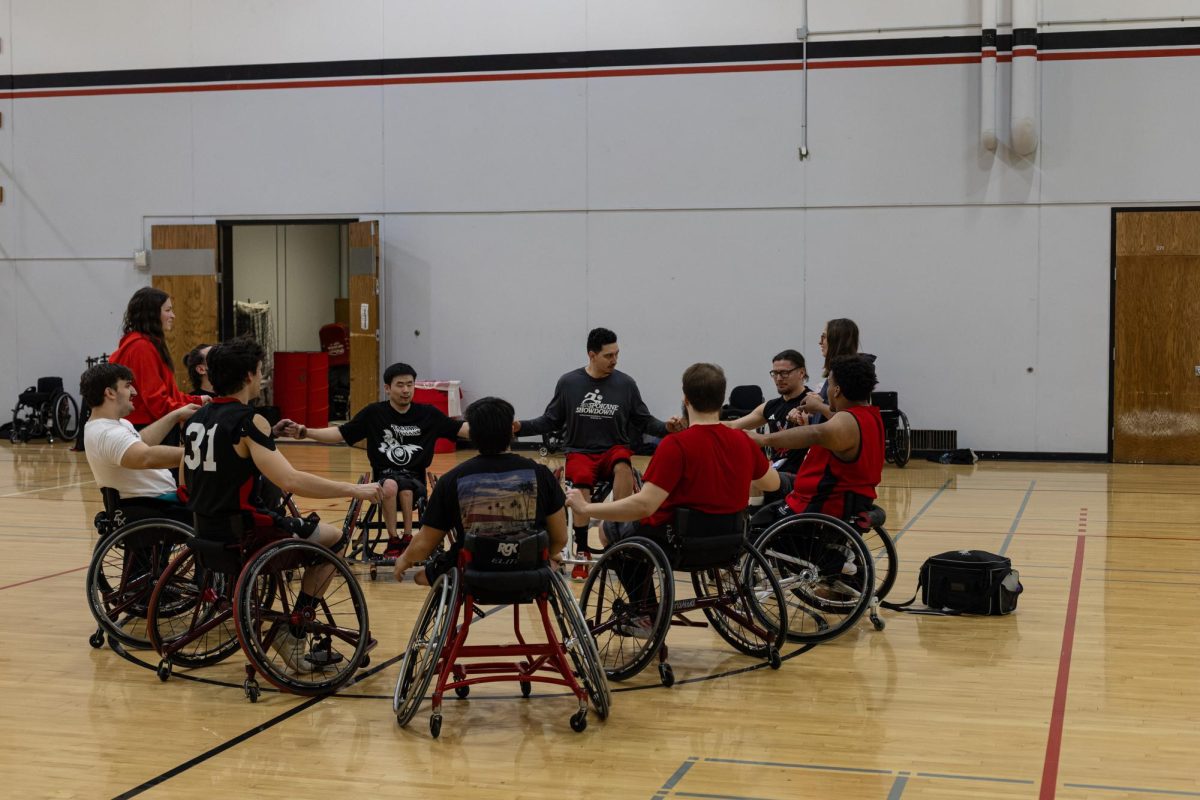
Eastern Washington University’s decision to end its Adaptive Athletics program has left team members feeling unheard, unvalued, and misunderstood.
The university informed coaches and athletes of its intent to cut the program – one of 12 Division I wheelchair basketball programs in the United States – during two meetings on Jan. 7.
“The reason we were given was financial stability,” assistant coach Yunis Butt said. “However, there are 11 other schools that provide sustainability to those programs… that being the reason was really frustrating.”
Butt believes that EWU could have done more to save the program. The university proposed the team continue relying on grants and fundraising but stated “those are not sustainable ways to run a program.”
Butt and head coach David Evjen proposed adopting funding strategies used by other programs, such as allocating tuition dollars and utilizing state funding. Butt said EWU was not responsive to the ideas.
“We weren’t included in any of those proposals,” Butt said. “We weren’t given any opportunities to actually have that be presented…we don’t really feel like the university gave it 100%.”
Student-athletes who remain at the EWU will receive a one-time $7,000 scholarship from the remaining Adaptive Athletics fund. The university also proposed transitioning wheelchair basketball to a club sport. EWU is currently the only team in the National Wheelchair Basketball Association that does not offer scholarships.
Butt said the proposal reflects a lack of understanding of the program.
Sophomore Tyler Jenkins agreed.
“They offered to make us a rec team, which we would have to pay even more money for,” Jenkins said. “Even then, it wouldn’t be as high a level of competition.”
Student-athletes who decline the scholarship to continue competing at the collegiate level must seek recruitment from one of the remaining 11 programs nationwide.
“Out of the hundreds of thousands of wheelchair basketball athletes who are looking to play collegiate wheelchair basketball, they only have 12 choices,” Butt said. “There’s probably only three or four spots available in the country.”
Jenkins said the decision shows a lack of value placed on disabled student-athletes.
“I just wish people valued wheelchair basketball as much as they do able-bodied basketball, or just other sports in general,” Jenkins said. “We deserve to play too, and I feel as though people don’t value us as much and don’t see us as athletes, just people with disabilities.”
Butt said the closing of the program contradicts the university’s earlier commitment to inclusion when it launched the Adaptive Athletics program in 2019.
“Eastern used to be a school that celebrated including this equitable opportunity,” Butt said. “To us, it feels like we’re taking a big step back from that.”
Jenkins said he plans to transfer to a smaller school closer to home to continue playing at a lower level.
“I feel like this place isn’t really my home anymore. I don’t feel valued here anymore by Eastern.”