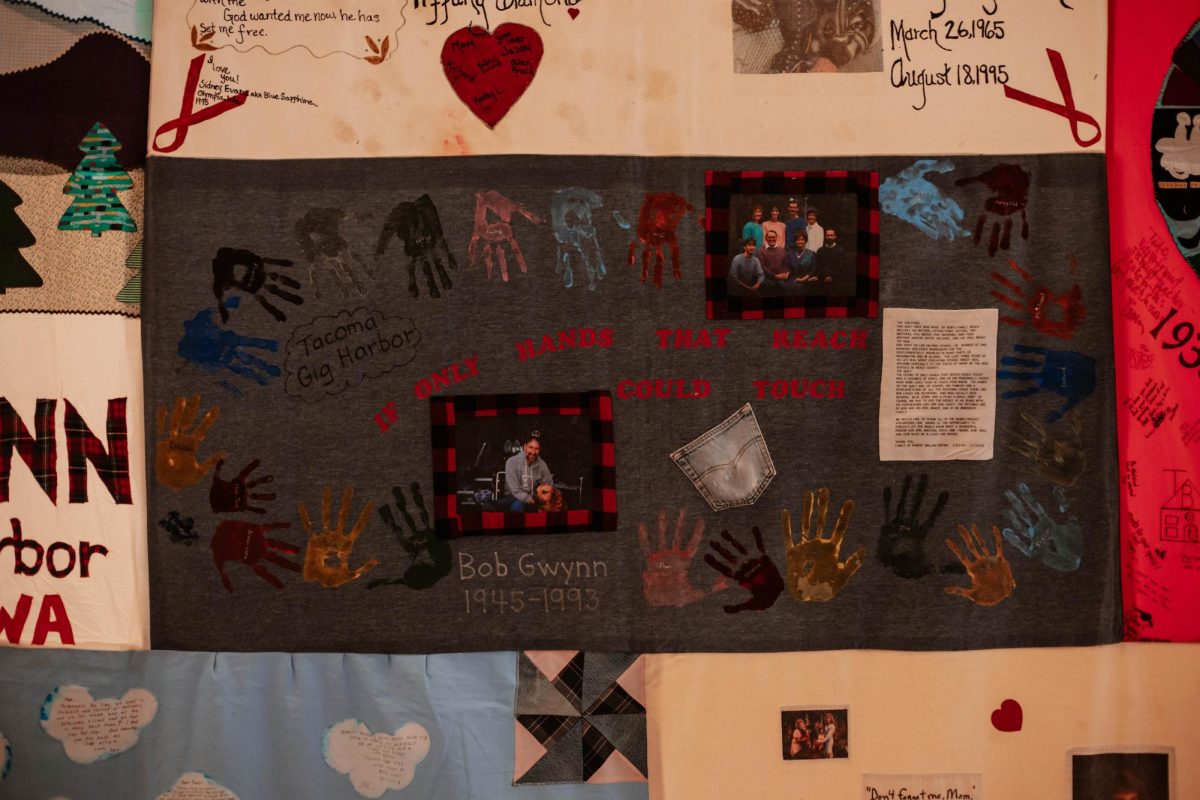
The AIDS crisis began in the United States in the late 1970s and marked the start of an epidemic. On Nov. 27, 1987, AIDS activist Cleve Jones put together the AIDS Memorial Quilt during the annual candlelight march, in remembrance of openly gay San Francisco Supervisor Harvey Milk and Mayor George Moscone.
That piece of art is now on display at EWU.
“It’s a big national thing,” said Al Waite, the program coordinator of the Eagle Pride Center, which advocates for LGBTQIA+ communities on campus. “It’s very personal. People will put quotes, pictures of them, notes, plushies, random things. All just to represent who they were and celebrate their life.”
Jones came up with the idea after asking people to write the names of loved ones lost to AIDS-related causes on signs that were then taped to the side of the San Francisco Federal building.
To Jones, the signs resembled a quilt, and the idea was born. Due to the stigmatization of AIDS victims, many loved ones chose not to memorialize them at funerals; some funeral homes even refused to handle their remains.
The quilt became the only way survivors were able to remember and celebrate the lives of their loved ones.
Different pieces of the quilt are displayed across all of America and it represents people from all 50 states and 28 countries. This year, the Eagle Pride Center rented out pieces of the quilt from the National Aids Memorial foundation. They were able to display pieces that represented AIDS victims who were from Spokane, Washington state, the Pacific Northwest, or college students as a whole.
The AIDS epidemic is not over. According to the 2025 statistics from the World Health Organization , there were 40.8 million people living with HIV at the end of 2024, With 630,000 dying from HIV-related causes in 2024.
“I think it’s important for someone to come and see the quilt because it definitely humanizes the AIDS crisis and the people lost,” Waite said. “Also, it’s nice to see the people behind it, that these were actual people and to celebrate who they were.